Troubleshooting
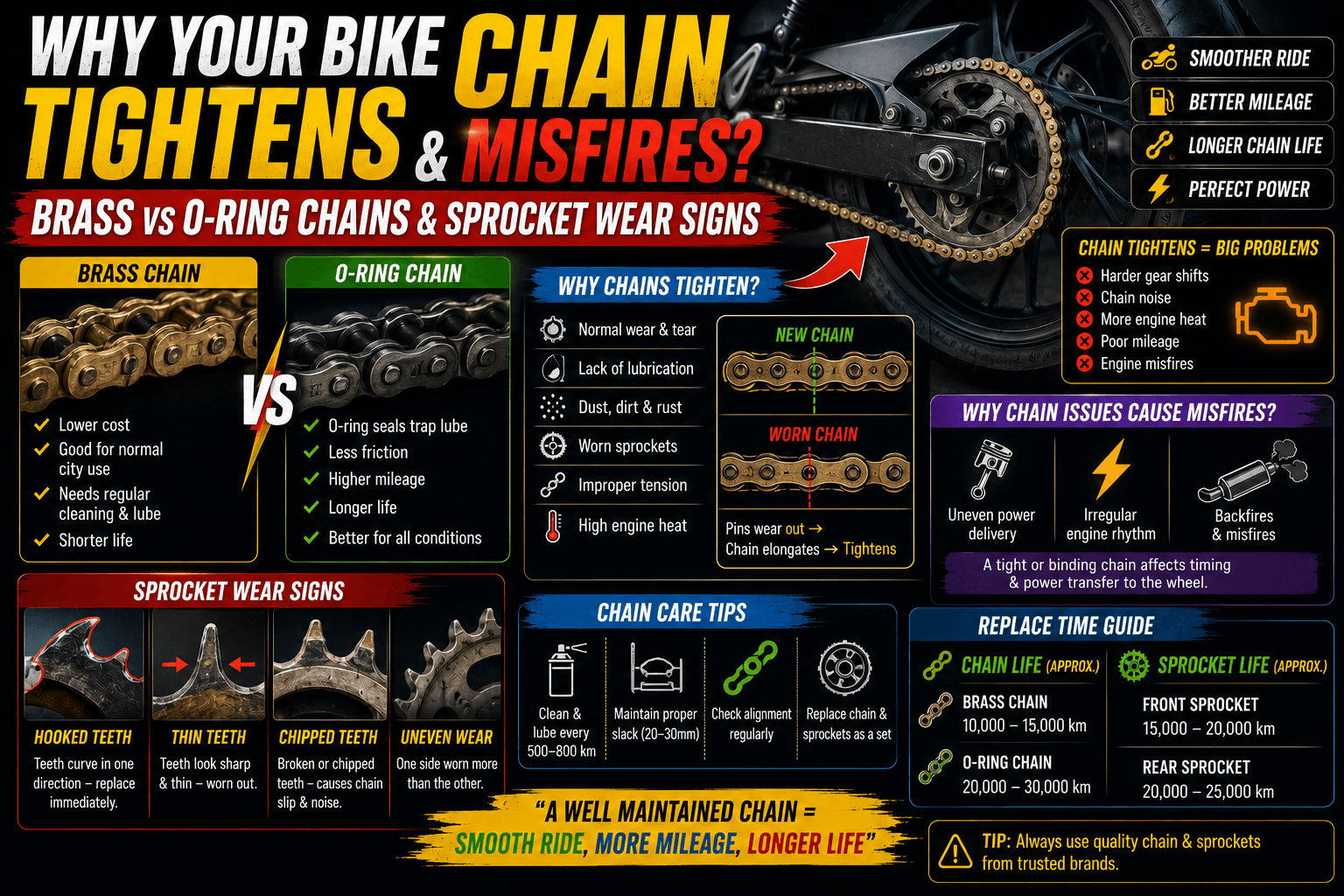
Why Your Bike Chain Tightens & Misfires: Brass vs O-Ring Chains & Sprocket Wear Signs

Drive Line Engineer
25 July 2026
5 min read
Understanding Uneven Chain Tightness (Tight & Loose Spots)
When rotating the rear wheel, if the drive chain becomes extremely tight at one point and loose at another, the chain has developed kinks or uneven pin stretch. Riding with uneven chain tension destroys gearbox countershaft seals and wheel bearings.
3 Signs Your Chain & Sprocket Kit Needs Immediate Replacement
- Hooked or Pointed Sprocket Teeth: Teeth resembling shark fins indicate severe pitch wear.
- Chain Adjuster at Maximum Limit: Rear axle adjuster is pulled all the way back, but slack still exceeds 35 mm.
- Chain Lifts Off Rear Sprocket: Pulling the chain backwards from the 3 o'clock position on the rear sprocket exposes more than half a tooth.
Standard vs O-Ring vs X-Ring Chains
- Standard Non-O-Ring Chain: Lightweight and inexpensive, but requires cleaning and lubrication every 300-500 km. Ideal for sub-125cc commuter bikes.
- O-Ring Chain: Rubber O-rings seal factory grease inside internal pins. Lasts 2x longer, ideal for 150cc-250cc performance bikes.
- X-Ring / Brass Heavy-Duty Chain: Reduces friction by 40% over O-rings, maximum lifespan for high-torque 350cc+ motorcycles.
Find genuine Rolon, Endurance, and heavy-duty chain-sprocket kits on MecSpot.
Need Quality Bike Tools & Parts?
Discover our wide range of authentic motorcycle tools and spare parts trusted by mechanics across India.
Shop NowNever Miss a Post
Subscribe to our newsletter for expert tips on bike maintenance and product launches.